
Facebook Recruiting Strategies to Attract Top Candidates

Facebook recruiting has been written off more times than we can count. Hiring managers post a job, get a flood of unqualified responses or none at all, then decide the platform “doesn’t work.” In reality, Facebook never stopped being effective for hiring; the way it needs to be used simply changed.
Today’s candidates are not browsing Facebook the way they did years ago, and employers cannot recruit the way they once did either. Facebook is no longer a digital bulletin board for job openings. It is a relationship-driven platform shaped by algorithms, communities, conversations, and content that feels human. Employers who still treat it like a job board tend to struggle, while those who adapt see strong results, especially for roles that are hard to fill through traditional channels.
Hiring managers and HR teams who succeed with Facebook recruiting understand one key idea: visibility alone is not enough. Candidate attention has to be earned. That means knowing how Facebook surfaces content, how people engage with job posts, and how to guide potential applicants from interest to action without friction. When used strategically, Facebook can reach passive candidates, speed up screening, and support a broader hiring strategy rather than operate in isolation.
The goal of this guide is to reset expectations and show you what Facebook recruiting looks like today. We will break down why it still works, how to use it effectively, what mistakes to avoid, and how to turn social engagement into qualified candidates.
Why Facebook Recruiting Still Works in 2026
Facebook recruiting continues to deliver results because it reaches candidates long before they ever visit a job board. While many hiring channels rely on active job seekers, Facebook allows employers to surface opportunities to people who are not looking but would still consider the right role.
- Access to passive candidates. Many of the strongest candidates are not actively applying to jobs. Facebook places opportunities directly into their daily feed, creating exposure that job boards cannot replicate.
- Unmatched audience scale and diversity. Facebook’s user base spans industries, experience levels, and career stages. With the right targeting, employers can reach niche audiences without sacrificing reach.
- A more human hiring experience. Candidates can read comments, ask questions, and observe how employers interact publicly. That transparency builds trust early and encourages better self-selection before applying.
- Most effective as part of a broader strategy. Facebook recruiting works best when it supports other hiring channels rather than replacing them. Used alongside job boards, referrals, and professional recruiting support, it strengthens the overall funnel.
Related: Attracting Passive Candidates: Ways to Secure Top Talent
How Facebook’s Algorithm Affects Candidate Reach
Facebook’s algorithm determines whether recruiting content is seen or ignored. Understanding how it evaluates and distributes posts explains why some job posts gain traction while others disappear almost immediately.
Engagement drives distribution
Facebook prioritizes content that sparks meaningful interaction. Comments, replies, shares, and time spent reading a post signal value to the algorithm. Job posts that generate early engagement are far more likely to be shown to additional users, including people outside an employer’s immediate network.
Ready to hire someone great?
Speak with our recruiting professionals today.
People matter more than pages
Content shared from personal profiles and within groups often outperforms posts published only on company pages. Facebook favors people-to-people interaction, which is why recruiter-shared or employee-shared job posts tend to have stronger reach and response rates. The same message can perform very differently depending on who posts it.
Paid reach still depends on relevance
Paid promotion expands visibility, but it does not bypass the algorithm. Facebook continues to evaluate how users interact with sponsored content and adjusts delivery accordingly. Recruiting ads that fail to drive engagement often cost more and deliver lower-quality candidates, even with increased spend.
How to Set Up a Strong Facebook Recruiting Funnel
Effective Facebook recruiting starts long before a job post goes live. Employers who see consistent results approach Facebook as a recruiting funnel, not a one-step solution.
1. Build awareness before you hire
At the top of the funnel, the goal is visibility without pressure. Employer brand content, team highlights, workplace culture posts, and role-related insights introduce your company in a low-commitment way. These touchpoints help candidates recognize your brand and build familiarity over time.
2. Turn interest into intent
Once awareness exists, job posts and targeted content perform better. Candidates who have already engaged with earlier posts are more likely to stop scrolling, read details, and respond. Retargeting tools allow employers to re-engage users who have interacted with recruiting content, increasing relevance and response rates.
3. Make the next step effortless
At the bottom of the funnel, simplicity matters most. Complicated application processes, unclear instructions, or slow follow-up can cause interested candidates to disengage. Tools like Facebook Messenger, short application forms, and fast responses help capture interest while it is still high.
Related: The Complete Guide to Social Recruiting
The Most Effective Facebook Recruiting Strategies
Not all Facebook recruiting strategies perform equally. The strongest approaches feel natural on the platform and focus on connection rather than promotion.
Post from people, not just company pages
Job posts shared by recruiters, hiring managers, or employees often outperform those published only on company pages. These posts feel more personal and trustworthy, which encourages engagement and questions. Even a brief introduction explaining who the role is for can make a significant difference.
Write for conversation, not broadcast
Facebook rewards interaction, and recruiting posts should invite it. Ending a post with a question or encouraging readers to comment for details helps spark discussion and increases visibility. Public replies also answer common questions for others reading along.
Build your employer brand between job posts
Employer brand content supports recruiting even when no roles are open. Posts that highlight team culture, growth opportunities, or everyday work experiences create familiarity over time. When a job post does appear, candidates are more likely to stop and engage because the company already feels known.
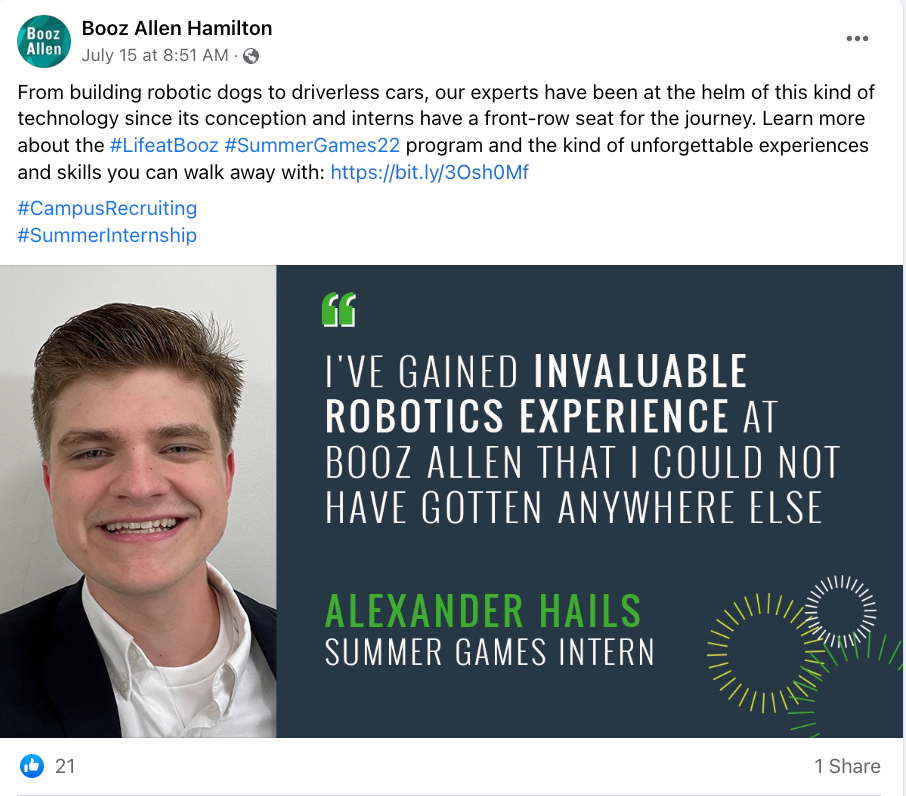
In this example, the company uses an intern testimonial to highlight growth and real-world impact, helping candidates emotionally connect with the organization before ever seeing a job opening.
Encourage employee amplification
Employees expand reach in ways company pages cannot. When team members share job opportunities within their own networks, posts often reach more relevant audiences. These connections frequently lead to higher-quality referrals and faster hiring outcomes.
Paid Techniques That Boost Results
Paid promotion can strengthen Facebook recruiting when used intentionally. The goal is to amplify what is already working, not to rely on ads to compensate for weak strategy.
- Boost posts that show organic engagement. Boosting job posts that already have comments or shares helps extend reach to similar audiences. Promoting low-engagement posts usually increases spend without improving candidate quality.
- Use Ads Manager for targeting control. Facebook Ads Manager allows employers to target candidates by location, interests, behaviors, and prior engagement. This level of control is especially useful for niche roles or competitive hiring markets.
- Retarget warm audiences first. Candidates who have already interacted with recruiting content are more likely to convert. Retargeting these audiences often delivers higher-quality responses at a lower cost.
- Prioritize creative that feels native. Recruiting ads perform better when they blend naturally into the feed. Short copy and clear value statements typically outperform formal job ad language.
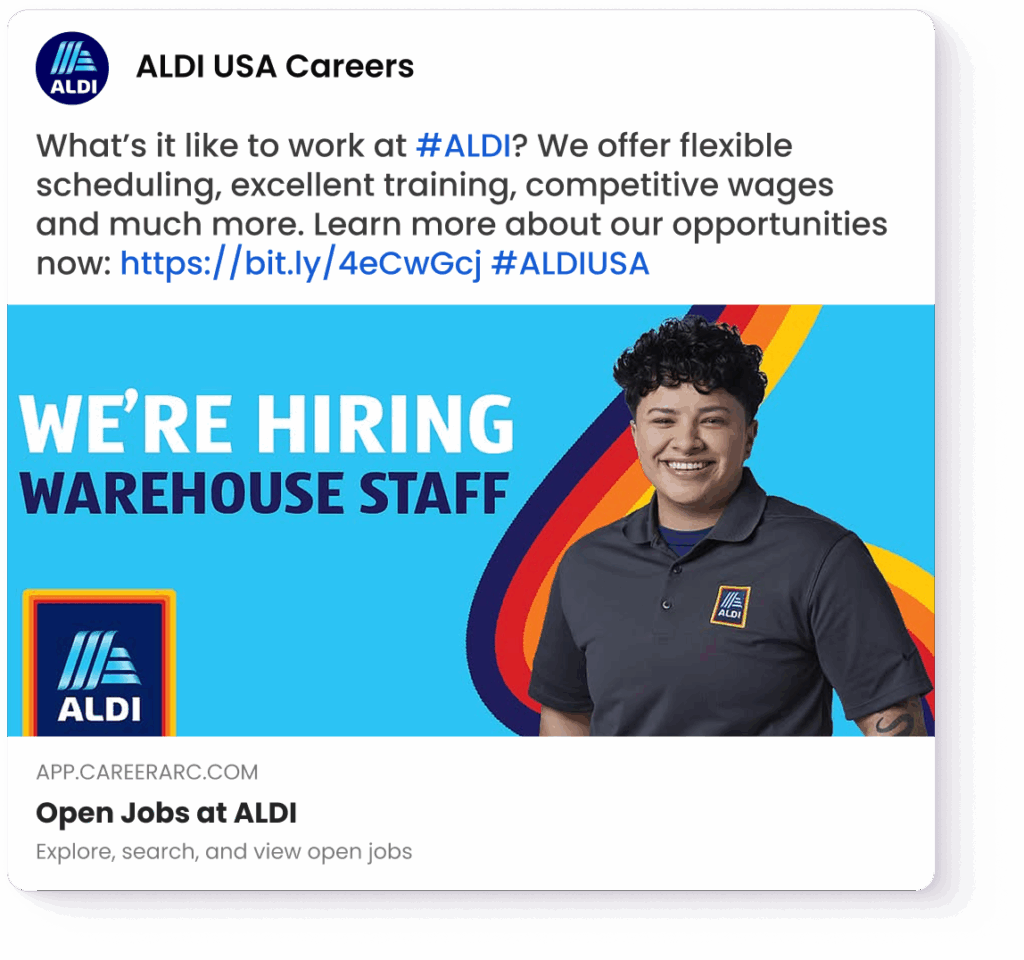
This paid recruiting ad is effective because it delivers a clear hiring message, highlights key benefits, and uses approachable visuals that work well in a fast-moving feed.
How to Create High-Converting Facebook Job Posts
High-converting Facebook job posts are designed for how people actually scroll and read. Unlike traditional job descriptions, these posts need to capture attention quickly, communicate value clearly, and make the next step feel easy.
- Lead with a clear, specific opening. The first sentence determines whether someone keeps scrolling or stops. Specific language helps the right candidates recognize themselves in the role immediately.
- Keep the content short and skimmable. Long paragraphs and dense qualification lists often get ignored on Facebook. Highlight only the most important details to spark interest without overwhelming readers.
- Highlight what candidates care about most. Pay range, schedule, location, and growth opportunities influence engagement more than job titles alone. Addressing these points early helps attract better-fit candidates and reduces unnecessary follow-up.
- Make the call to action obvious and simple. Candidates should never have to guess what to do next. Clear instructions encourage faster responses while interest is still high.
- Use a conversational, human tone. Posts written in plain, natural language tend to perform better than corporate phrasing. A human tone makes opportunities feel approachable rather than transactional.
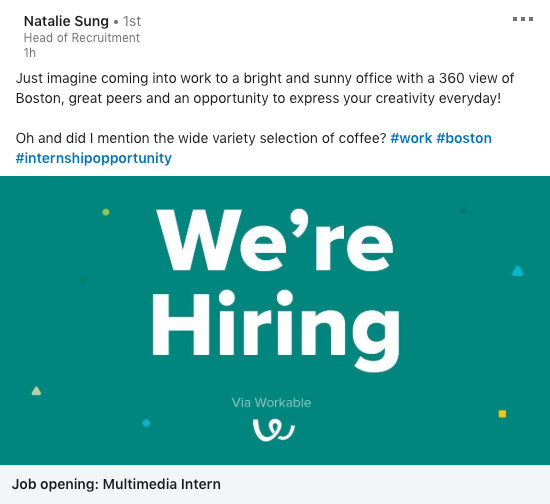
In this example, a hiring leader shares a job opportunity in a personal, lifestyle-driven way, proving that even links to formal job ads perform better when the post itself feels human and conversational.
Using Facebook Messenger for Faster Candidate Screening
Speed plays a major role in Facebook recruiting, and Facebook Messenger helps capture interest early. Many candidates prefer sending a quick message over completing a full application, especially at the exploration stage.
- Start with an immediate response. Automated replies confirm receipt and set expectations for next steps. Even a brief acknowledgment helps keep candidates engaged.
- Ask a few qualifying questions upfront. Messenger works well for basic screening around availability, location, or requirements. Simple questions help identify fit without creating friction.
- Transition to a human conversation quickly. Automation supports speed, but personal follow-up builds trust. A timely handoff often determines whether interest turns into an interview.
- Connect Messenger to your hiring tools. Messenger can integrate with applicant tracking systems and scheduling platforms. These connections help teams manage volume and follow up consistently.
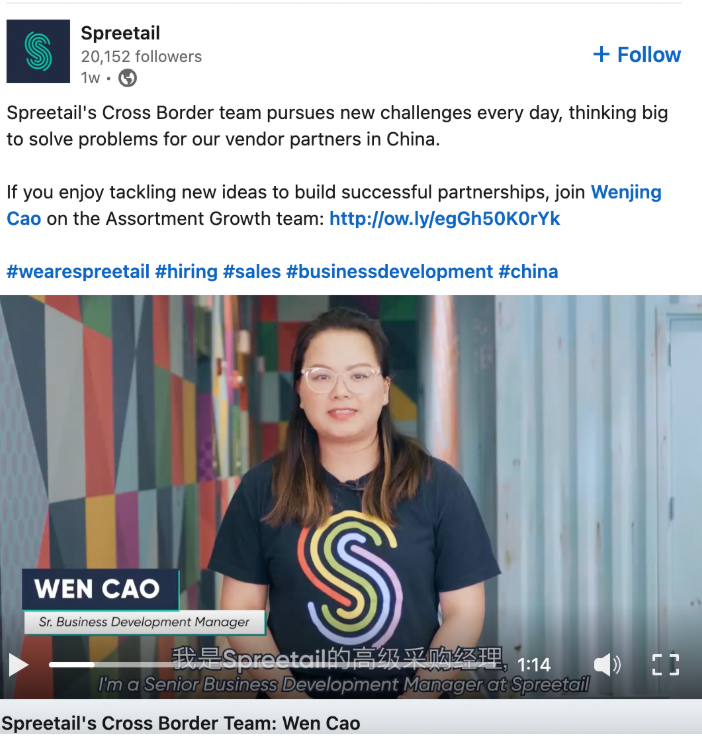
Here, video is used to introduce a real team member, making the opportunity feel personal and inviting candidates to start a conversation rather than scroll past.
Leveraging Facebook Groups for Hard-to-Fill Roles
Facebook Groups can be a highly effective channel for Facebook recruiting, especially for niche or hard-to-fill roles. Many groups are built around shared professions, locations, or work environments, which often leads to stronger relevance and intent.
- Do focus on context and transparency. Group members want to understand why a role is relevant to them. Brief context and clear details help candidates decide quickly whether to engage.
- Do follow group rules and culture. Every group has expectations around job-related posts. Respecting those rules helps build credibility and keeps posts visible.
- Don’t copy and paste full job descriptions. Long, formal job descriptions often feel out of place in groups. Short summaries written in plain language perform better and encourage conversation.
- Don’t post and disappear. Engagement keeps posts visible and builds trust with group members. Prompt replies signal professionalism and maintain momentum.
Related: Recruiting Hard to Fill Positions (Strategies That Actually Work)
Metrics That Matter When Hiring on Facebook
Success in Facebook recruiting is not defined by how many people see a post. The most useful metrics focus on candidate quality, speed, and efficiency, helping hiring teams understand whether Facebook is contributing to real hiring outcomes.
- Engagement rate. Comments, shares, and meaningful interactions influence how far recruiting posts travel. Engagement should be treated as an early signal of interest, not a final measure of success.
- Message and response rate. How often candidates message and how quickly your team responds directly affects conversion. Faster response times typically lead to stronger engagement and fewer drop-offs.
- Cost per qualified candidate. Low costs mean little if candidates are not a fit. Tracking cost per qualified applicant helps determine whether Facebook is attracting the right talent, not just volume.
- Time to first conversation and time to fill. Facebook can shorten hiring timelines when used effectively. Measuring how quickly candidates move from engagement to screening reveals process efficiency.
Common Mistakes to Avoid
Facebook recruiting often falls short because of avoidable missteps, not because the platform lacks potential. Recognizing these common mistakes can quickly improve reach, engagement, and candidate quality.
- Treating Facebook like a job board. Posting long, formal job descriptions without context rarely works on Facebook. The platform favors conversation and relevance over static announcements.
- Ignoring comments and messages. Comments and messages signal interest and deserve timely responses. When engagement is ignored, posts lose visibility and candidates lose interest.
- Over-branding recruiting content. Heavy logos and corporate language tend to reduce authenticity. Candidates respond better to clear, human messaging that focuses on the role and experience.
- Measuring the wrong outcomes. High reach or low cost-per-click can be misleading without quality candidates. Facebook recruiting improves when success is defined by fit, speed, and hiring results.
How to Integrate Facebook Recruiting With Your Full Hiring Strategy
Facebook recruiting is most effective when it supports a broader hiring strategy rather than operating in isolation. While Facebook excels at building awareness and engagement, it works best alongside channels that capture active job seekers and support deeper evaluation.
Job boards, referrals, and career sites continue to play an important role, especially for candidates who are ready to apply. Facebook often introduces opportunities earlier, reaching passive candidates before they enter a job search mindset. When these channels are aligned, candidates experience a smoother journey from discovery to decision.
Consistency across platforms matters. Job expectations, employer messaging, and candidate experience should feel cohesive, whether someone first encounters a role on Facebook or through a job board. Mixed signals slow decision-making and reduce trust, while alignment reinforces credibility.
As hiring demand increases, many teams struggle to manage social recruiting, screening, follow-up, and performance tracking internally. At that point, Facebook recruiting becomes far more effective when supported by partners who understand how social sourcing fits into a complete, results-driven hiring strategy.
Related: The Top 10 Social Media Recruiting Tools Every Hiring Team Should Know About
Partner With 4 Corner Resources to Attract Higher-Quality Candidates
Facebook recruiting can be a powerful channel, but results depend on execution. Posting consistently, responding quickly, screening effectively, and tracking performance all require time, focus, and experience. For many hiring teams, managing every moving piece internally becomes difficult, especially when roles are time-sensitive or hard to fill.
At 4 Corner Resources, we help employers use Facebook recruiting as part of a larger, more effective hiring strategy. Our recruiters understand how to turn social engagement into real conversations and how to move candidates efficiently from interest to interview. We manage sourcing, screening, and follow-up so promising candidates do not slip through the cracks.
We also recognize that Facebook is rarely enough on its own. Some roles require deeper sourcing, faster turnaround, or a broader reach than social recruiting can provide. That is why our services extend beyond Facebook, supporting contract, contract-to-hire, and direct hire needs across industries and job types. We meet candidates wherever they are, not just where it is convenient.
If you are investing time into Facebook recruiting but not seeing the quality, speed, or consistency you need, partnering with an experienced staffing firm can change the outcome. Connect with us today to start building a hiring strategy that works smarter, adapts faster, and delivers candidates who are ready to make an impact.