
BlackRock Just Put $100 Million Behind Skilled Trades & The Timing Couldn’t Be Better
Sign Up For Daily Job Market News
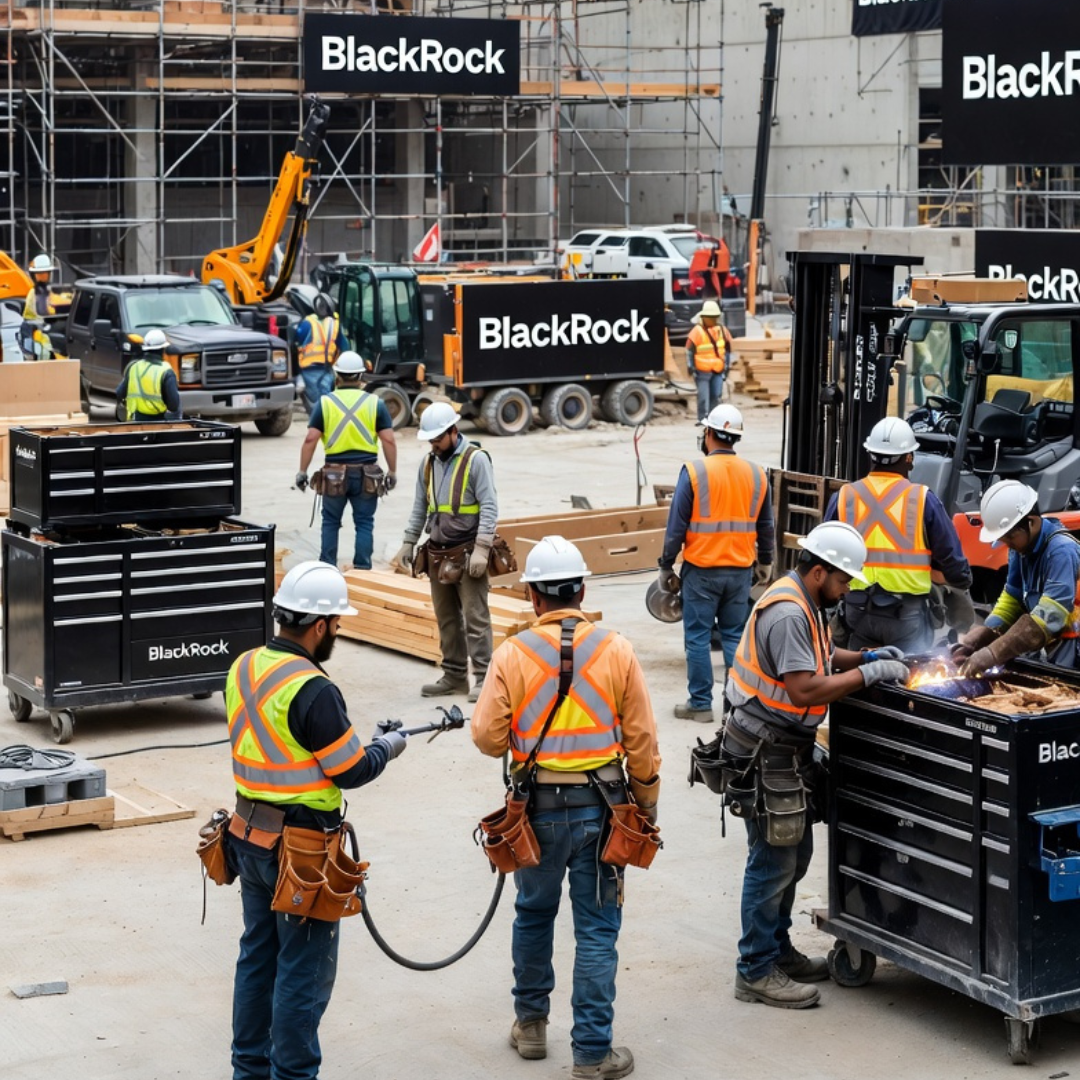
There’s been a lot of bad news in the job market lately, so let’s start with something genuinely encouraging. Today, the BlackRock Foundation announced a $100 million philanthropic initiative called Future Builders, a five-year commitment to expand access to skilled trades training across the country. The goal: reach 50,000 workers with support covering pre-apprenticeship access, training completion, licensure, and financial education tools designed to help workers build savings from their first paycheck forward.
Why now? According to BlackRock CEO Larry Fink, the U.S. needs an estimated $10 trillion in infrastructure investment by 2033 to modernize aging systems and build out new energy, digital, and AI infrastructure. Capital alone won’t get that done. Roads, power grids, and data centers don’t build themselves, and none of it happens without electricians, HVAC technicians, plumbers, and ironworkers. The problem is we already don’t have enough of them, and the gap is about to get significantly worse.
Employment in infrastructure-related skilled trades is projected to grow more than 5% over the next decade, nearly double the national average of 3%. At the same time, retirements are accelerating, and an entire generation was funneled toward four-year degrees instead of trades apprenticeships. The result is a shortage that’s been building for years and won’t fix itself. Whether BlackRock is acting purely out of altruism or sees long-term business alignment here, the outcome is the same: real investment in a real workforce gap. We’ll take it either way.
BlackRock says additional phases of the Future Builders initiative will be announced over the next 12 months.
Employers Around the World Plan to Hire More in Q2, But the Data Has an Expiration Date
The news from BlackRock pairs well with the latest global hiring outlook from ManpowerGroup, which surveyed more than 41,700 employers across 42 countries on their Q2 2026 staffing plans. The seasonally adjusted Net Employment Outlook came in at 31%, up 6 points from last quarter and 7 points year over year. Globally, 45% of employers plan to increase headcount between April and June, while only 13% expect reductions.
The U.S. came in at 38%, 7 points above the global average and among the stronger readings worldwide. The Information sector led all industries with a 41% outlook, up 12 points year over year, notable given how much conversation there’s been about AI displacing tech roles. Construction and Real Estate came in at 34%, Professional, Scientific & Technical Services at 33%, and Trade & Logistics also at 33%. The one sector that declined quarter over quarter was Hospitality, which slipped 3 points to 22%. Small employers with fewer than 10 workers showed the biggest year-over-year improvement of any size group, up 12 points.
There’s a meaningful caveat baked into all of this, though. ManpowerGroup collected this data between January 1 and February 3, before the most recent wave of tariff uncertainty took hold and before the February BLS jobs report showed U.S. payrolls falling 92,000. The report itself acknowledges it may not reflect the impact of subsequent events. Sentiment surveys are snapshots, not forecasts, and the conditions that shaped this one have shifted considerably since early February. The number is encouraging. Just hold it loosely.
Volkswagen Is Cutting 50,000 Jobs in Germany, U.S. Automakers Are Watching
The episode’s last headline is the one that brings things back down to earth. Volkswagen announced plans to cut 50,000 jobs across its German operations by 2030, up from a previously announced target of 35,000. The expansion of cuts follows a brutal 2025: full-year earnings fell 44% year over year, the company’s weakest performance in nearly a decade. CEO Oliver Blume confirmed the scope of the reductions in a letter to shareholders.
The pressures driving this aren’t unique to Volkswagen; they’re industrywide. Competition from Chinese automakers has intensified globally. The EV transition is reshaping cost structures faster than legacy manufacturers can adapt. And trade tensions are adding friction to supply chains that were already under stress. Through collective bargaining agreements and workforce reductions, VW reported roughly €1 billion in cost savings in 2025 and is targeting more than €6 billion in net annual savings by 2030.
It’s a German story, but the forces behind it aren’t contained to Germany. U.S. automakers are navigating the same pressures (Chinese competition, EV cost challenges, tariff exposure), and the ripple effects of what’s happening at VW are worth watching. If you’re in manufacturing or actively hiring in the auto sector, the conditions affecting European producers right now are a preview of decisions U.S. companies may be weighing sooner than expected.
Find the perfect fit for your team.
Speak to one of our recruiting experts today.
Frequently Asked Questions
Yes, and it’s getting worse. Infrastructure-related skilled trades jobs are projected to grow more than 5% over the next decade, nearly double the national average. Retirements are accelerating, and far fewer younger workers have entered trades apprenticeships compared to previous generations. The gap between demand and available workers is expected to widen significantly through the 2030s.
The survey asks employers whether they expect to increase, decrease, or hold headcount steady in the coming quarter. The Net Employment Outlook (NEO) is calculated by subtracting the percentage planning reductions from the percentage planning increases. A higher positive number means more employers are planning to hire than lay off. ManpowerGroup has run this survey since 1962, making it one of the longest-running forward-looking employment indicators in the world.
The 50,000 cuts announced are specific to Germany. But the competitive pressures behind them (Chinese EV competition, trade tensions, the cost of transitioning production lines) are global. U.S. automakers and suppliers face many of the same dynamics, so this situation is worth monitoring for anyone in or adjacent to the auto manufacturing sector.
According to ManpowerGroup’s survey, the skills employers expect AI to augment most over the next 12 months are ideas and creativity (77%), problem solving (76%), and training (75%). The skill least likely to be augmented by AI? Ethical judgment, at just 46%. The data suggests AI is expected to assist human thinking, not replace it, at least in the areas that matter most for complex work.
View Full Transcript
BlackRock’s Future Builders
Welcome back to Cornering the Job Market. Today’s headlines include a global brand that’s a household name announcing 50,000 job cuts and a positive hiring sentiment based on a massive global survey. But first, BlackRock just made a$100 million bet that the trades are the future of work in America. The BlackRock Foundation announced a new philanthropic initiative called Future Builders. They committed$100 million over the next five years, targeting electricians, HVAC technicians, plumbers, and iron workers. Their goal is to reach 50,000 workers with pre-apprenticeship access, training, licensure support, and financial education tools.
So why would they do that? Or specifically, why would they do that right now? According to CEO Larry Fink, he says the time to do it is now because America needs an estimated$10 trillion in infrastructure investment by 2033 to modernize aging systems and build new energy, digital, and AI infrastructure, and capital alone is not enough. People are central to building our nation’s future. I couldn’t agree more. This is great to see. And the infrastructure build-out that he references includes roads, power grids, and data centers, and none of that will happen without tradespeople. We already have a shortage and it is only going to get worse. That is a demographic fact. We see a lot of retiring coming, of people in the skilled trades, and there’s an entire generation that has all but missed out on moving naturally into that space because they’ve been told to go to college, right?
They’ve been saying, you know, they’ve been told that that is the path you should follow. While sort of quietly, jobs like electricians and plumbers are becoming or already have become some of the most in-demand work in the entire country. And like I said, it’s just gonna grow. Employment is projected to grow more than 5% over the next decade in skilled trades, which is nearly double the national average of 3%. So this is a problem that exists in the country. It looks like BlackRock is stepping up to do something about it. I don’t think this alone will solve it, but it’s awesome to see a step in the right direction that they’re doing it, given back. So who knows, maybe there’s some self-serving interest in that with BlackRock. Wouldn’t say that’s not the case, but it is good for the American workforce and society as a whole. So we will take it even if they’re going to benefit too. And also they said that there’s more to come that they’ll announce uh even more uh as part of this initiative over the next 12 months.
So I say, good job, BlackRock, for now. So we started off positive. I want to keep it going today. That’s rare that I get to do it. There’s so much gloom and doom in the job market lately.
ManpowerGroup Q2 outlook
But this next headline is I’ll say cautiously optimistic. It’s from Manpower Group. They surveyed more than 41,000 employers across 42 countries, and they have what they call a global net employment outlook. They put it out every quarter, and it came in for Q2. They just announced a Q2 number at 31%, which is up six points from last quarter and up seven points year over year. For the U.S. specifically, the outlook is 38%, which is seven points above that global national average. So good news on the surface. At the sector level, information technology leads at 41%. That’s up 12% year over year. So great stuff there.
There’s so much talk about AI replacing jobs in IT specifically, but the outlook is still really positive for people there. There’s jobs that are also being created right now. Where it ultimately lands, we’ll see. But that is a very positive thing. Only one sector declined, that was hospitality. Also, good news for small employers. The companies that have fewer than 10 workers showed the biggest year-over-year improvement, up 12 points. So hooray for small businesses. Look at all this good stuff going on today. Now, there is a caveat to all of this. I have to bring the mood down a little bit. This data was collected between January 1st and early February. So if you consider that timing, this was before the trade and tariff uncertainties really kicked back in.
And of course, that thing that we’re not supposed to call a war. So I don’t know what the Q3 sentiment will be. I won’t be surprised if it’s less. Also, we just have had the disastrous jobs report that came out last week. But for now, it’s good. For now, it’s positive. So we will take that. Now, there’s also an AI component to the survey, and you know I have to talk about that. Only 8% of employers say AI meets their expectations when it comes to hiring, onboarding, and training. Okay, fair enough. 92% report workforce challenges using AI. And their top complaints are that AI can’t teach practical skills or use good judgment and it struggles with soft skills and its decision-making process is unclear.
Well, yes, if you’re trying to use AI for those things, you will consistently be disappointed. And you shouldn’t be doing that in the first place. AI is useful for a lot of things, but that is not it. They’re also using it for sourcing and screening. Using that at scale is a great thing. It helps counter the volume problem that often exists in recruiting thanks to one-click applications. And so there’s some great benefit to using AI. It does a wonderful job of solving volume problems and certain other things, but trying to get it to replace human judgment is just a non-starter. That is certainly not feasible today. Who knows if it ever will be? I hope not, but today that shouldn’t that shouldn’t be something you’re attempting. Now, when asked which AI skills will augment work in the next 12 months, the top of the list was ideas and creativity, followed by problem solving and training. So yeah, that those are good uses of AI. I get that. The skill least likely to augment, uh, be augmented by AI is ethical judgment. Again, what are you doing? Why are you why are you expecting AI to show ethical judgment? Stop it. You shouldn’t be doing that.
So that is what this survey says. Um, look, let humans do what humans do best, let AI do what it does best, and don’t try to cross those streams. It’s it’s not a good idea. It’s an interesting survey. We’ll be sure to link it in case you want to check it out.
Volkswagen cuts 50,000 jobs
Now, there’s just one more headline today, and this is going to bring the mood down a little bit. It’s been fun so far, talking about positive stuff for the most part. But Volkswagen announced that they’re going to cut 50,000 jobs by 2030, which is up from a previously announced number or target of 35,000. Company’s clearly not doing well. Their full 25 year earnings came down 44% year over year. So that’s a that’s a huge drop. It’s their weakest performance in nearly a decade. And yes, this is a story about Germany. These jobs are in in Germany, not US, but the conditions that are impacting them are absolutely going to affect the auto industry here. Things like competition from China on a global scale, the EV transition, of course, the trade tensions that are persisting and in some ways increasing. So yeah, it’s it’s a German, it’s a German story, but it’s worth keeping uh an eye on to see how U.S. auto manufacturing may be affected in the near term as well. Those are the headlines for today. That’s it. So just a little bad, mostly a lot of good.
Fun fact
Here’s your fun fact before we go. The number one complaint in the modern office is meetings that could have been an email. I would take it one step further and say sending an email is also done too much when a DM can certainly serve the same purpose. So a Slack message, a Zoom DM, a text, whatever it is you have access to. Choose that if you have a quick question or need to share a quick point. The world has way too many emails. I get way too many emails. Anyone listening probably does. So meetings are bad, emails are a close second to me. Let’s normalize sending DMs when that will suffice. Can we all agree on that? I hope we can. So that is really it for today. Now I will say goodbye. Thank you for listening. Please like and subscribe if you’ve gotten this far. And I look forward to talking to you tomorrow.