
Judge Halts Federal Layoffs, CEO Confidence Dips, & Workers Lack ‘Good Jobs’
Sign Up For Daily Job Market News
Episode Overview
We also unpack Gallup’s new job quality study, revealing that only 40% of Americans hold what’s considered a “quality job.” The rest are grappling with unpredictable schedules, pay concerns, and limited career mobility. Still, most workers say they feel respected at work. So where’s the disconnect, and what can employers do right now to fix it?
Additional Resources
- US CEO Confidence Ticked Down in Q4
- The American Job Quality Study
- Court Blocks Trump Administration’s Latest Mass Layoffs
Transcript
Pete Newsome: 0:00
In today’s job market headlines, a new study shows how American workers feel about the quality of their jobs, and a judge is trying to prevent the White House from moving forward with layoffs during the federal shutdown. But first, CEO Confidence took another step backward this quarter, which tells us a lot about how corporate America views the economic road ahead. According to the conference board’s Q4 2025 confidence index, sentiment among chief executives fell to 48, down from 49 last quarter. Anything below 50 signals more pessimism than optimism. Only 24% of CEOs expect economic conditions to improve over the next six months, while 38% expect things to get worse.
0:46
That’s far from ideal, but 22% still plan to increase capital spending in Q4, and that’s up 15% over Q3. Here’s what’s interesting about the numbers. Even with the dip, confidence is still slightly above 2023 levels when recession fears were peaking. Roger W. Ferguson, who was the vice chairman of the business council, said despite slightly weaker confidence, business investment and hiring plans strengthened marginally. And at that point, the percentage of CEOs who plan to expand their teams rose to 32%, which is up from 27% in Q3. So that’s a trend in a gray direction when it comes to jobs. The survey also touched on AI, where 81% of CEOs believe it will fundamentally change most job roles in their organization within five years.
1:36
I can’t believe that’s not 100%. If you look at the wording, most job roles and within five years, five years is an eternity in the world of AI. And it’s not even asking about all job roles. So I don’t know what that other 19% is thinking that they don’t believe AI is going to have much of an impact on positions within their organization. I find that pretty curious. And another interesting point about jobs specifically that jumped out at me is the CEOs were asked to list their top concerns when it comes to adopting AI. Only 13% express concern over potential job displacement and employee morale. And when I see that, I can’t help but wonder if that means they don’t think job displacement will happen since most didn’t express concern about that, or if they just don’t care if it does.
2:25
Now, overall, this survey doesn’t offer a positive sentiment, but it’s definitely not all gloom and doom either. It looks like these CEOs are what I would consider preparing more than panicking. So it could be worse. Let’s hope we don’t get there. And the next headline, Gallup just released their American job quality study for 2025. It’s a report that measured five areas, or what they call dimensions, that they say matter most to determine the quality of a job. Here’s what they are: financial well-being, workplace culture and safety, growth and development opportunities, agency and voice, and work structure and autonomy.
3:02
Here are some of the numbers that jumped out at me. The first couple are just awful. Only 40% of US workers are currently in what they consider to be a quality job. That is just a sad state of affairs. Six out of ten American workers can’t say that. And 29% who took the survey say that they’re struggling financially. Now, on a slightly more positive note, more than half said that they’re paid fairly. So go ahead and reconcile that. College degrees played a big factor in this, more than I expected in terms of being at a quality job. It’s around 50% if you have a bachelor’s degree or higher, while it’s only 28% for those with a high school education or less. So for now, having a degree is still going to be a big determining factor in your job satisfaction and happiness.
3:49
And speaking of that, if you have a quality job, you’ll be much happier in your personal life, both emotionally and physically. I mean, the survey showed that to be very clear. This was a big survey. 18,000 employees took it, and 62% report that they are in an unstable environment or unpredictable environment when it comes to their work schedule. I find that to be shockingly high. And I say that as the owner of a staffing company. I would never tolerate that from the companies that we support. We absolutely insist on making sure candidates know when they’re going to be working, how many hours are available, what their schedule is. That is as fundamental in describing a job and having someone be secured at a job as compensation and anything else associated with the job.
4:41
Now, granted, we play in the white-collar space. That’s we we we feel corporate jobs, we don’t really get involved in blue collar. So I have to assume that’s where that’s happening, but I still think that is inexcusable for employers to not do a better job for those who work for them in terms of giving them predictability in their schedule because that is just tied to everything in terms of income and being able to plan for your life. So, really, employers, you have to do a lot better in that area. It’s just incumbent upon you to do so. But the end on a positive note, and I was also surprised by this, the 83% who took the survey feel they are treated with respect where they work. So, look, that’s a really positive thing. I mean, not everyone does, but 83%, I mean, that’s an overwhelming number from a study this big.
5:33
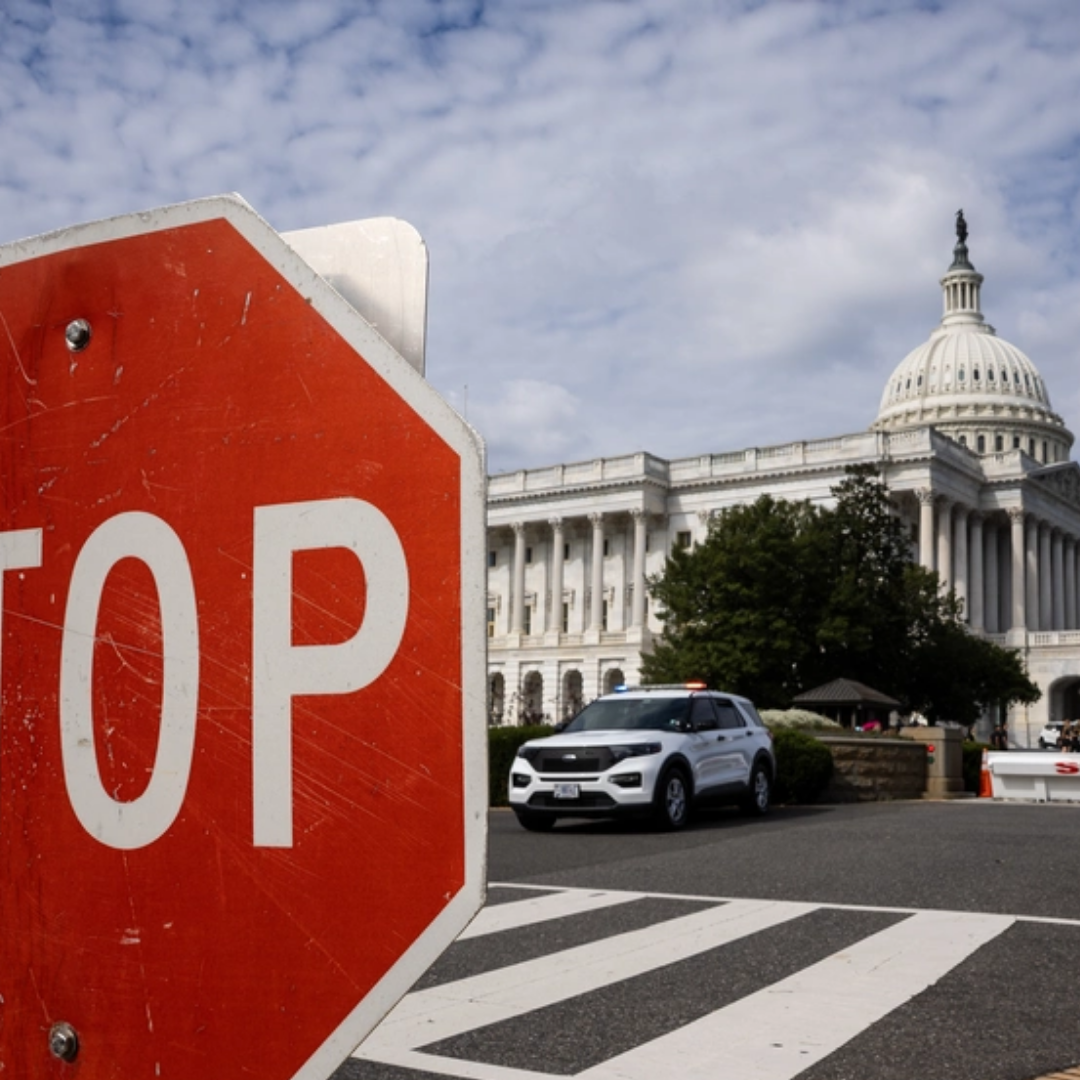
So I’ll leave, I’ll leave us with that positivity. It’s a really interesting read. You can download the full report from the website on gallup.com. And the final headline today a federal judge in California temporarily blocked the Trump administration from carrying out its latest round of layoffs, targeting roughly 4,000 federal employees. The judge called the administration’s actions both illegal and in excess of authority. A temporary restraining order was issued, which halted all reduction enforced notices tied to the government shutdown. Now, for some context, this is a rare and pretty extraordinary move. Federal agencies never historically lay off employees during a shutdown because by law, shutdown is supposed to pause operations, not permanently eliminate jobs. But the White House has been testing those boundaries.
6:22
They said they were gonna do it, now they are doing it. They’re framing the layoffs as part of a broader effort to shrink the bureaucracy. There’s a lot of support behind that, but the way they’re doing it is just very abnormal to say the least. It’s unprecedented. Now, the administration argues that Congress’s failure to pass a spending bill gives them the legal authority to cut programs and by association, the staff. And so while this ruling temporarily stops what they’re doing, there’s no layoffs right now. The administration, of course, is expected to appeal. It seems that every decision by President Trump lately is challenged and then ends up decided in court. That’s our new normal, I guess, at least for now.
7:05
I’d like to say this shutdown will end before it goes all the way to the Supreme Court, but considering how far apart the sides are right now, and there is no end in sight, they seem to be making no progress to get to a deal. That’s probably where all of this is heading. So we’ll continue to monitor that each day and hope something happens soon. And in closing, here’s your fun fact for the day. Before he became a superstar, George Clooney sold insurance door to door.
7:34
Now I was surprised to see that. I think of George Clooney as a young actor. I think he was on a soap opera. My wife would know that. I’d probably need to check with her, but I don’t know when he was selling insurance. I mean, maybe he was a young kid. That doesn’t make a whole lot of sense to me. But that’s the claim. I’m going with it. George Clooney knocked on your door to sell insurance. Well, that would be quite the surprise, wouldn’t it? So thank you for listening today. I appreciate it. Please like and subscribe, share with anyone who might be interested. And I’ll look forward to talking to you tomorrow.