
AI Could Replace White-Collar Jobs Within 12 Months
Episode Overview
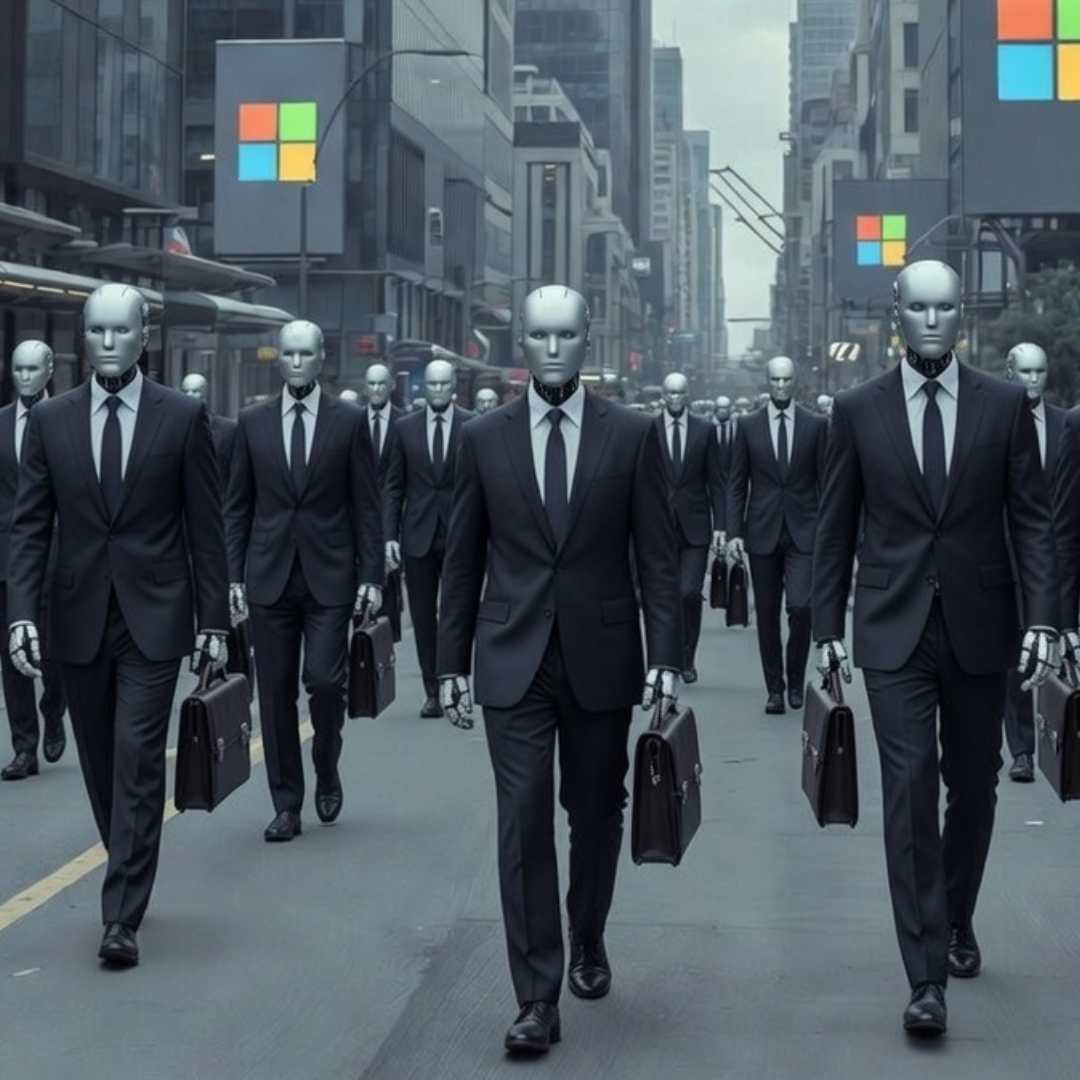
Today’s headlines collide in a big way. Microsoft’s head of AI says many professional desk jobs could be automated within 12–18 months, pointing to software development as proof that the shift has already started. Roles are evolving toward oversight, strategy, and judgment instead of execution.
At the same time, a new Goodwill report shows younger workers facing a “generational recession.” Gen Z confidence is falling, many resist AI at work, and long job searches are becoming common. Career plans are being delayed as uncertainty grows.
Then there’s the day-to-day reality: a Monster survey finds most employees work past 40 hours each week, yet most say the extra time doesn’t improve performance and often harms health.
Taken together, the message is clear. Work is changing faster than people are adapting, and pressure is rising from both technology and expectations.
Additional Resources
Transcript
Pete Newsome: 0:00
Welcome back to Cornering the Job Market for Friday, February 13th. I’m just realizing right now it’s Friday the 13th, so be careful out there, everyone. I’m Pete Newsome, and today’s workforce news and headlines include a new monster survey that finds 73% of workers regularly exceed 40 hours a week, but 80% say the extra time isn’t making their work any better. Plus, a new report from Goodwill Industries reveals Gen Z is experiencing what researchers are calling a generational recession, with the youngest workers the least confident right now, and they’re also the most likely to quit and the most likely to put their lives on hold. But first, Microsoft’s head of AI just told the Financial Times that most white-collar professional jobs will be fully automated within 12 to 18 months. We’re hearing that again, right? This is starting to become a recurring theme, and I agree with it. It sounds like a doomer thing, and to some degree it is, but this AI revolution is picking up speed daily. So here’s what happened. Gustafa Soliman from Microsoft was doing an interview with Financial Times, and he said most of those automated tasks will be fully automated by an AI within the next 12 to 18 months. He was talking about professional desk jobs, lawyers, accountants, project managers, marketing professionals.
1:29
It’s a growing list and it’s it’s growing very quickly. Now, bold predictions about AI come and go, but Soliman pointed to software engineering as proof that the shift is already happening. He said many software engineers report that they are now using AI-assisted coding for the vast majority of their code production, which means that their role shifted now to this meta function of debugging, scrutinizing, of doing the strategic stuff like architecting. And that transformation has happened in just six months. Even Linus Torvalds, the creator of Linux, is very famous in that world. No one is more famous, probably. He’s publicly saying he now uses AI as his primary coding tool. I mean, think about what that actually means. One of the best, if not the best, developers in the world is relying on AI. So for everyone who says AI doesn’t work, yeah, it’s not perfect right now. We know that. But this is where things are heading very rapidly. So that’s what’s happening right now. Now, on the AI talent war, Soly Modic knowledge, the salary numbers are, in his words, eye-watering. We’re seeing crazy numbers there for sure. But he said it won’t last because the knowledge is proliferating like crazy. And yes, that’s true. It is um, well, that’s fleeting, right? All these crazy salaries, you’ve probably heard about those too, where the big AI companies are just offering the experts in that area whatever they want. But pretty soon everyone’s gonna have that capability. I mean, that’s what AI is delivering for us. Um, and also more people are entering that field every day.
3:08
So I like seeing that people are heading towards AI, they need to, um, but boy, I mean, it’s almost impossible to keep up with all of this. So this timeline is just accelerating, right? We don’t know exactly when and and to what degree things are changing. But what I hope everyone is paying attention to, and one of the reasons we’re doing this daily news, where I’m sharing this on a daily basis, is because I don’t think where awareness is where it needs to be. Too many people are ignoring this right now. And when you see those who are in the know more than anyone, I mean, this is Microsoft’s AI chief. He is telling everyone what’s happening. We just have to pay attention to it and get involved. And that’s that’s the one thing it is inexcusable not to do right now if you are ignoring AI, if you’re dismissive of it. Shame on you. And make that change immediately, please.
4:10
So I’ll I’ll get off that soapbox for now. But I’m going back to it. I’m sure I’ll be back Monday talking more about AI’s impact on the job market because it’s just picking up speed at at an incredibly rapid rate. But let’s turn to a new Goodwill report that says what’s it just says that’s not happening, right? So this is a problem. You see the contradictions of of this. And what that does to me is it puts false a false sense of security um in too many people. It just you see someone like this guy, the so Solimon, saying, I don’t know, he’s saying the sky is falling, but he’s saying this is this is rushing at us. And then you see reports that say, uh, it’s not it’s not really that big of a deal yet. Or David Sachs, who is uh the AI czar for the White House, saying, no, if anything, AI is creating jobs, or Jensen Wong from NVIDIA a couple of weeks ago was kind of making a big deal about how many jobs are being created because of the data centers being built from AI.
5:16
Yes, there are some new jobs being created right now, but the net job loss is what we have to worry about. And for everyone individually, for their profession, whatever it is you’re doing, you need to make sure you’re using it. Okay, I said I wasn’t gonna talk about it anymore, but here I go. Now, back to the Goodwill survey. Not enough people are paying attention. 35% don’t use it professionally at all, according to this survey. And 38% of Gen Z who are digital natives are actively resisting AI at work. So as you can see on the screen, social media is Gen Z’s top career resource at 38%. AI comes in at just 21%. So the employer side is just as bad according to this survey. Only 41% of workers say their employer provides adequate AI training. Don’t wait for your employer, take the bull by the horns yourself, please. Um and 34% say their employer doesn’t discuss AI at all.
6:14
So Seleimon is saying it’s 12 to 18 months, and a third of employers aren’t even bringing up the topic. Lovely. That is not a good state of things, but it’s that’s what I’m seeing too is just largely ignoring it despite all the signs. Equally big story in this report is what Goodwill is calling a generational recession. Gen Z unemployment in the survey came in at 15%. That is astronomically high. Um, that compares to 11% across all other generations. So those are much higher numbers than we see the government reporting. So take that for what you will. And only 31% of Gen Z plan to stay on their current career path compared to 48% for Gen X and Boomers. And those numbers sound high to me too. I mean, Gen X and Boomers changing careers? Come on, that’s not that’s not happening. This is where I start to lose faith in the surveys. I will continue to report on surveys from large reputable organizations, but that number just it just seems way too big to me, right? If you’re if you’re a boomer, half the boomers aren’t changing jobs right now, changing their career path. Come on, that that’s silly. Um so that’s what’s going on with with this report.
7:29
A couple other things. 42% of Gen Z have delayed major financial milestones like buying a home, paying off debt, or investing because of job insecurity. That is a bad trend that we see right now. It’s an unfortunate one. I wish I had a great solution or answer to that. I just don’t. I’m a father of four Gen Zers, and I worry about them for that very reason. Affordability is a problem. Also, layoffs were uh a part of the survey. 13% of Americans were directly laid off in the past year. 17% had their hours cut, and among those currently looking for work, nearly one in four have been searching for more than a year. More than a year for your job search. I’m not surprised to see that. I mean, I that part I buy into. It’s it’s it is rough out there in the job market right now, to say the least. So that’s that’s what’s going on in the survey. We’ll link it, of course, check it out. It’s it’s interesting. Um there’s a lot to it. Although I’m still wondering why Goodwill Industries is putting out this survey. I guess everyone’s getting in on the AI and job uh state of things with the job market right now, but didn’t see that coming from Goodwill. But there it is. And then one more story for today. Uh, while workers are worried about AI in the economy, there’s a more immediate problem affecting most people right now. And it’s based on a survey from Monster. Monster surveyed more than 800 full-time workers and found that 73% regularly work more than 40 hours a week. And 45% straight up call themselves workaholics. 80% of workers say that working beyond 40 hours does not improve the quality of their work. Only 20% say the extra hours help. And 16% say quality actually gets worse. Now, I I’m gonna disagree with that assessment. 40 hours, if you want to 40 hours isn’t isn’t excessive.
9:30
Come on. I mean, it it’s that’s a full week, I get it, but the times where I’ve really wanted to have my productivity high, I was working significantly more than 40 hours. Now I’m old school, not everyone’s gonna agree with that. And that you you can find lots of studies saying that oh, when you work more than eight hours, your your quality does decrease. But consider the most successful people you know. That’s all I’ll say. Look at the most successful people you know. Maybe not the hours they’re working today, but at some point in their life, I would say that the vast majority of them were working significantly more than 40 hours a week. So if you disagree with me on that, let me know. But I am sticking to it again. I’m I’m I’m old school. I I think the more you work, generally, the more you’re gonna produce. Here’s a breakdown of what workers are actually logging. 22% work 41 to 45 hours, 18% work 46 to 50, and a combined 22% are working more than 50 hours every week. 11% are logging more than 60. And you can see the gray bars are under 40 and everything in orange is over time, so a lot of orange on there. Most workers don’t actually see it as a bad thing, so I guess a lot of people agree with me. Uh, when asked how they’d feel about being called a workaholic, 35% say they’d feel complimented. Yeah, I mean, it’s it’s again, those who accomplish in any aspect of life put a lot of time and effort into it, right? Whether it’s athletics or learning a skill, you know, the doing the bare minimum is generally not something to compliment, right?
11:08
Um at least not from my perspective. Um, so 20 27% said respected, uh, that they feel respected, 38% said neutral, they don’t really care about being called a workaholic. So um, you know, the the the implication is our culture is normalized overwork. I again I is that really overwork if you’re working 45 or 50 hours a week? I don’t think so. But you may completely disagree with me on that, and that’s okay. Um so why are people doing it? They asked about that too. 47% um point to employer expectations or company culture is a top reason. Um that’s not because they’re ambitious, that’s they’re feeling forced to, I mean, have pressure on them to do so. That’s not good, right? I I don’t I’m not perpetuating that. I I’m not suggesting that you should be forced to do it. I’m saying if you want to do it and you see the benefit of doing it, and I think there is benefit in doing it, then then it’s okay. But being forced to do it, that that’s there’s some loss associated with that. That’s a whole different uh different deal, some legal reasons why that should not be happening. Um but 25% said they overwork because they’re afraid of losing their job, and that’s that’s just unhealthy all around.
12:26
Um, so look, if you are interviewing or hiring, I think, well, if you’re hiring, you should be obligated to let candidates know if you expect them to work 40 hours a week, right? You have to be honest about that, communicate that up front. Okay, so even though I may have my old school feelings feelings about this, I think open communication and being um up front with the expectations is is huge and it’s inexcusable not to be. So let me be sure to go on record with that. And as a candidate, when you’re interviewing, ask about the hours, ask about the culture. Be sure you do your best to try to get a good feel about that. Now, some companies won’t be completely up front, they won’t be forthcoming about it, but at least try and try to get those hours in writing if you can up front. But the toll from this seems to be very real. 85% report negative health impacts, 50% cite mental health challenges like stress, anxiety, and burnout, and 49% report physical um physical impacts like disrupted sleep. So that’s that’s not good to see at all. So, you know, seeing those numbers tell me that expectations aren’t aligned. I think that that seems really clear from this. So um this is a leadership problem dressed up as a dedication problem, is how I’m interpreting this. If nearly half your workforce says they’re overworking because of your culture and 80% say it’s not improving their output, well, you’re not gonna get more productivity. That that’s in that’s key too, right? If no one wants to do it, they’re feeling like they’re forced to, and they don’t believe that that extra work is delivering results, well, that’s bad all around.
14:11
So more than one thing can be true in this case. So that is it for today. Thank you for listening. If you’ve gotten this far, um it’s Valentine’s Day, and it’s Friday the 13th. How’s that for a bit of a contradiction, right? That’s have a scary day today, uh, hopefully a very pleasant and happy day tomorrow. But before we go, here’s your fun fact the first ATM was inspired by a chocolate bar dispenser. So that’s appropriate for Valentine’s Day, right? Although I’m not making the connection that an ATM where you get money. Okay, yeah, I guess that makes sense, right? You get chocolate, you get money from the ATM. Yeah, happy Valentine’s. Eat your chocolate. Don’t work too hard. Unless you want to, then you should. But not because you’re forced to. That is it for today. Please like, subscribe, share with anyone who you think might be interested. And give me your feedback on the hours. Tell me you think I’m wrong. I can deal with that. We can debate that um in the comments. So I look forward to uh to hearing from anyone who has an opinion on that. And I’ll talk to you next week.