
Employers Are Out of Touch, AI Anxiety Is Rising, & Office Romance Isn’t Dead
Sign Up For Daily Job Market News
Episode Overview
Pete starts with a new report from Indeed, which finds that most employers believe they understand what workers want, while job seekers overwhelmingly disagree. He explains why this gap widens in an employer-driven market, how perceptions flip when power shifts, and why balance (not extremes) matters most for long-term job stability. The episode also explores the widening AI trust gap, as employers push adoption while many workers remain uneasy about what automation means for their careers.
Next, he turns to Monster’s 2026 workplace report, which shows that office romance is still very much alive. More than half of workers admit to having a crush at work, and one in three report having been in a workplace relationship. Pete also highlights why managers play an outsized role in job satisfaction: many employees stay longer because of great leadership or leave because of poor management.
Additional Resources
Transcript
Pete Newsome: 0:00
Welcome to Cornering the Job Market for Friday, January 30th. Happy Friday, everyone. I’m Pete Newsome, and today’s headlines include a major company CEO’s thoughts on which jobs are safe and which ones aren’t due to AI. And the state of office romance in 2026. Yes, I am going to talk about that today. But let me start with a new report from Indeed. It says employers are out of touch, job seekers are over it. What now? Those are their words, not mine. But here’s the deal. Indeed did a survey that shows employers think one thing and job seekers think another. Which has pretty much been the case since the beginning of time, right? They asked the question: do employers get workers? 70% of employers said, Yeah, we understand what workers want, but only 18% of job seekers believe that their employers understand what they want. Now they didn’t ask if employers care what job seekers want. That is an interesting question in a time where it is such an employer’s market. So perhaps that has something to do with it. Because a couple of years ago, when it was the opposite, I think this survey would have shown something entirely different where employers were bending over backwards to accommodate job seekers and to retain the employees that they had. And it doesn’t really surprise me that these numbers are so far apart right now. But I think to a significant degree, those numbers will change depending on who’s in control, which way the pendulum is swinging.
1:34
And right now, I’ll say unfortunately, because I like balance in the market. Let me tell you, as a staffing company owner and who’s also an employer, it was not a fun time in 2022 when it was just such an employee’s market to such an extreme degree. And it’s not fun when it’s such when it’s a big employer’s market, because when no one’s hiring, that’s not good for anyone. So I personally like balance. Now, if you hear me make that statement and say, well, it doesn’t sound like you favor the employees. Believe me when I say an employees’ market when it’s too extreme is not a good thing because what happened in 2022, where a lot of people were hired with salaries that were unsustainable, and they were hired to a level that was unsustainable, and then there were mass layoffs as a result, right? And that’s just not good for anyone. So I don’t like extremes. I really like balance. So we’re not right quite there right now. Hopefully, as the year goes on, we get better. All right, let me get back on track with this survey. They also asked about market perception split. 41% of workers say it’s getting worse versus 50% of employers who say it’s improving. Again, a disconnect, right? Well, employers probably think it’s improving right now because they’re the ones in control. They also measure an AI trust gap. 40% of employers prioritize implementing AI. I’m surprised it’s not higher. That’s a when I see these surveys that are so inconsistent, every company owner I know is prioritizing AI.
3:11
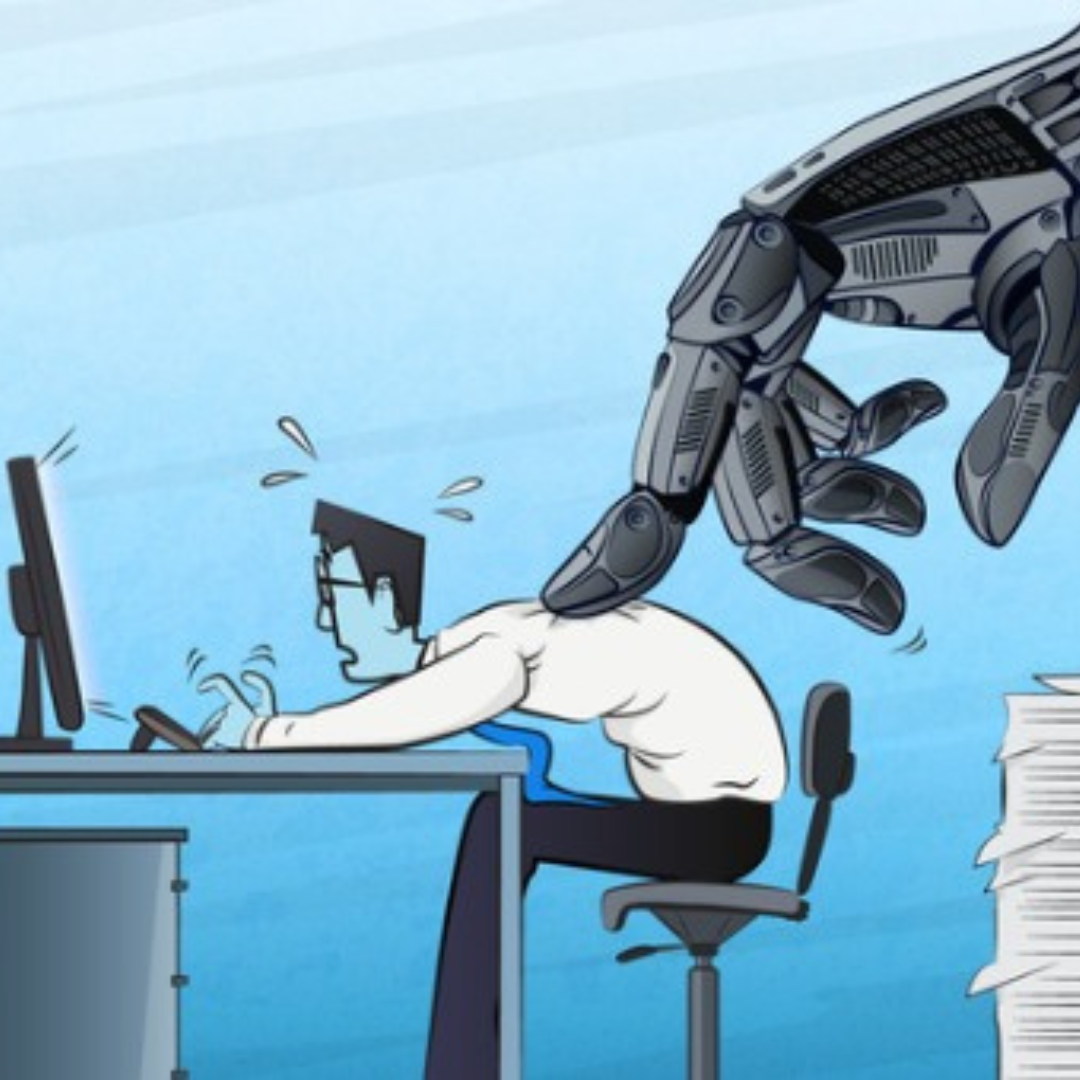
So to see this survey say that only 40% are when the numbers have to be 90% plus, um, just makes me question everything that comes after it. But nonetheless, okay, a lot of employers prioritize implementing AI, but only 13% of job seekers are excited about it, while 35% of job seekers are concerned. So, what that’s telling us, this is not a surprise. I mean, I I can buy into this a lot easier is that yeah, job seekers are afraid AI is going to take their job, as they should be, because we know that is what companies are on a mission to do, and we know that it is happening or going to happen. You could argue it hasn’t happened to a significant degree yet. But anyone who thinks it is not an absolute certainty that it will, I you need to do some more research, or just listen to me, because I’ll share the news uh daily as it comes out. So anyway, job seekers and and workers do have uh a reason to be concerned. So I I guess the what I’d like seeing from that is just awareness, right? Because too many people that I run into are just oblivious to what’s happening with AI, and that is not going to lead to There’s an interesting quote on the survey that I wanted to share. Matt Burnt, who is head of Indeed’s Job Search Academy, said, quote, younger generations, know the old, do a good job, and you’ll have a long-term career here. Social contract is gone. I’ve got to take care of myself. And I found that interesting because, yes, people do believe they have to take care of themselves now, but that has always been the case. It’s just the perception has shifted. Companies have always and will always do what is best for the organization as a whole.
4:55
So I would say that’s a fallacy to think ever that, well, as long as you do a good job, I mean, ask, you know, that of how that went for companies that completely closed up shop and left cities, you know, whether it was a steel mill that closed or a company that went out of business. I mean, you should never fully rely on another organization to take care of you professionally and financially. You always have to be looking out for yourself. So I guess in a way I like seeing that younger generation the younger generation is aware, but I would also question that it ever that security and safety ever existed in the first place. I think just there’s been a perception shift, and for the good reason, too. I mean, individuals do have to take care of themselves. So that is the Indeed survey. Now, moving on, I did say I would talk about Office Romance. So here it is. Monsters 2026 Workplace Report shows that apparently Office Romance is alive and well. Now, we didn’t need Monster to tell us that, did we? Because at this point everyone’s seeing Cold Playgate, right? We know there was Office Romance alive and well at that concert in Boston, um, despite the fact that it certainly shouldn’t have been. But it was, and we all got to see it. I’ll say for better or worse, but no, it was just, I think, I think for worse. I mean, there was a lot of entertainment value, perhaps, but um yeikes.
6:23
Don’t go in public trying to sneak around where there’s cameras and the very, very large jumbotron screens everywhere. So, anyway, back to the survey. Monster surveyed a thousand U.S. workers and found that 53% say they’ve had a crush on a coworker or manager. More than half. There’s a lot of Roman eyes going on in the offices, apparently. And 33% say they’ve been in a romantic relationship at work. Now, what’s interesting there is that sounds really high to me. 33%, one out of three have been in a romantic relationship at work. I wonder how many of those were public versus sneaking around. But one of the things that I do think about often with so much uh so many young people working remotely is they don’t have the opportunity to develop romantic relationships, which historically that is how so many relationships have started. People meet at work, through work, and I would suspect these numbers will decline significantly uh in the years ahead. But it’s nice to see that they’re still high for now. So lots of um lots of romance in the workplace right now, apparently. They also asked in the survey about manager relationships, and 55% who took the survey say they’ve stayed at a job longer because of a great manager, and 56 said that they have left primarily due to a bad manager. So who you report to makes a big difference. We all know that it is as important as anything else in job satisfaction and your work environment.
7:55
So if you don’t have a good relationship, if you’re going to work somewhere and you’d be an employee, one of the things I believe in very, very strongly is you have to make sure your manager likes you. Do whatever it takes. That is your number one priority as an employee, is to make sure your manager thinks you’re doing a good job. Because if they don’t, it’s going to be miserable for you. And if you can’t do that, then you need to leave, right? The manager has to be happy with your performance, and everything cascades down from that. So take it from me on that. I learned that lesson the hard way a long time ago, and it has stuck with me since. And I’ve given that as advice many times over the years. And I see a lot of people get it wrong on uh too many occasions. So make sure that if you can’t have a good relationship with your manager, you know, you should probably figure out how to get out of there as quickly as possible. Next are some comments from the WIC CEO. His name is Avi Shai Brahme, and he told Business Insider his biggest worry is the future of the employment market because he expects AI to shrink a massive amount of roles as technology advances. He predicts that around 70% of the top 20 most popular jobs in the U.S. today will be affected by AI over the next five to 10 years. And when I see that, I think five to ten years, that is an eternity. I mean, I I think all the popular jobs in, I think all jobs in the US are going to be affected by AI over the next 10 years.
9:25
I mean, we are going to be in an unrecognizable state that far out. And I even think five years is a super long time in this rapid moving environment that AI has created. His message is correct, but goodness gracious, 10 years. I mean, we may as well talk about, you know, 10,000 years. That’s so far away. Now, he does believe that driving jobs are likely to be impacted soon. So we see the robo taxis, and uh that that’s becoming increasingly common. I believe those will be everywhere, and I know a lot of people are terrified of self-driving cars, but when you look at the data, it shows how much safer they are. I mean, it is not even close. And when you look at the numbers of fatalities that we have every year that are completely avoidable because humans were driving, and we know it’s not just drunk driving anymore. I mean, it’s it’s being distracted by your phone. I every day when I’m driving in my car, I see people holding their phone up, you know, in between their face and the windshield, and it’s just I mean, it’s it’s a disaster in the making every time you get on the road. Well, autonomous driving, self-driving cars are gonna take that away. So when you look at the data, it is very, very clear that the robots are better drivers. They just are. Um, so driving jobs are going away. Thanks, customer service and call center jobs are going away soon, and software developers, they’re they’re going away as well. And I I I agree with them 100% on all of that. Um he said on the safer side, roles that depend on human performance or interaction, like athletes or performing artists, are less likely to be replaced in the near term.
11:10
So, yeah, I guess okay, well, if you can if you can be a professional athlete, then yes, that is a path. How about that though? That’s that’s what we have to deal with. Either, either we’re you’re screwed or well, you better be super talented as an as an artist or an athlete. I think that is um of course athletes are gonna be safe. Goodness gracious. How about everything in between? The the truth is, A, no one really knows how quickly it’s going to happen. But B, as time goes on, it starts to look kind of dismal. So it’s important and necessary to be aware of it. So there are your headlines for today. It is not all gloom and doom, not yet, especially if you can if you’re seven feet tall and you can shoot a basketball well, you’ll be fine. But um, pay attention to AI, please, if you’ve gotten this far with me today. It is it is really important. But before we go, here is your fun fact Friday afternoons, and it is a Friday afternoon. They are statistically the least productive time of the work week. So are you working right now? If it’s Friday afternoon, I am. I’m still working. I’m productive, right? I’m having fun talking on this podcast. So thank you for listening. Thanks for sticking with me this far. Please like, subscribe, and share with anyone who you think might be interested. And I look forward to talking to you next week.