
The Bank CEOs Who Said “Don’t Worry” Are Now Cutting Jobs
Sign Up For Daily Job Market News
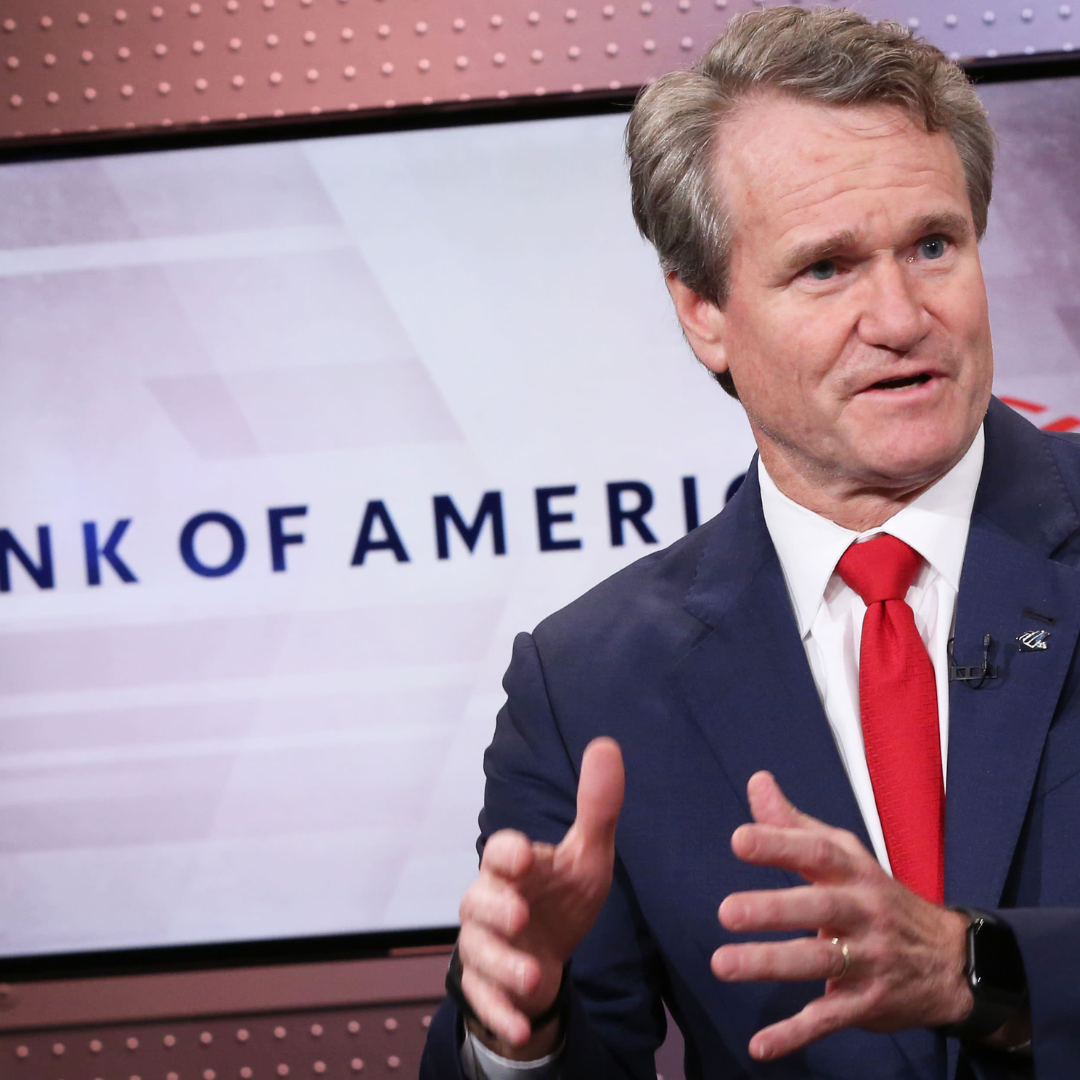
The New York Times reported that the six largest U.S. banks (PMorgan Chase, Citi, Bank of America, Goldman Sachs, Morgan Stanley, and Wells Fargo) posted $47 billion in combined Q1 profit, up 18%, while shedding 15,000 employees. Every one of them credited AI to some degree. Citi has pledged to shrink its workforce by 20,000 through what one executive called a “productivity and efficiency journey,” and is paying Anthropic, Google, Microsoft, and OpenAI to automate legal document review, account openings, trade invoicing, and customer data work. Wells Fargo CEO Charlie Scharf has been the most direct: “These are all opportunities to do things much, much more efficiently with AI than humans have been doing.” He added that most of his peers are “afraid to say it because no one wants to stand up and say that we are going to have lower head count in the future.”
The geographic detail worth paying attention to: Citi’s recent cuts hit employees in San Antonio, Tucson, and Tampa, lower-cost metros that banks have been relocating back-office work to for the past decade, marketing those cities on stable, well-paying finance jobs. Those standardized, process-heavy roles are now among the most exposed to automation precisely because they’re the most standardized. What started as a tech sector story has moved squarely into financial services. The Moynihan pivot from December to April is the most instructive data point in this report. If your employer is giving you a similar “you have nothing to worry about” speech today, note the date.
Only 1 in 5 Young Workers Think It’s a Good Time to Find a Quality Job
The entry-level market is harder than the national unemployment rate suggests, and young workers know it. Axios reported Tuesday that Gallup data from Q4 2025 shows only 20% of young workers believe it’s a good time to find a quality job, down from 62% at the peak in October 2021. That’s one of the sharpest mood swings Gallup has recorded on this measure.
The numbers behind that sentiment are real. The overall U.S. unemployment rate sits at 4.2%, near generational lows. For recent college graduates ages 22-27, the rate is 5.6%, based on the latest NY Fed data. That gap is close to the widest on record. For 70 years, a college degree has produced lower unemployment than the general workforce average. COVID broke that pattern, and it hasn’t recovered. As VandeHei and Allen frame it: “AI anticipation is the factor right now, not AI implementation.” CEOs are pausing entry-level hiring because they expect AI to handle the work eventually, while also trying to avoid repeating the post-COVID overhiring mistake. The result is a hiring freeze at the very rung where careers used to start.
Staffing your team doesn’t have to be hard.
Reach out and see how we can help.
87% of HR Leaders Are Planning Layoffs & Most Employees Don’t Know What Happens Next
LHH’s 2026 Mobility Breakdown Report, based on a survey of 3,000 HR leaders and more than 8,000 employees across seven countries, puts the structural shift in stark terms. 87% of HR leaders say their organization has already conducted or is planning layoffs in the next 12 months. That’s up from 73% in 2024. 78% now describe layoffs as “regular” events rather than one-time reductions. The question is no longer whether restructuring will happen. It’s whether companies have any real infrastructure for handling it.
The data suggests most don’t, or if they do, workers can’t find it. 77% of HR leaders say their companies offer redeployment programs for affected employees. Only 19% of workers say they can identify those programs. That’s a 58-point gap between what leadership believes it’s providing and what employees actually experience. LHH’s read is that the programs either don’t exist at the scale leaders claim, or they’re buried deep enough that they’re functionally invisible. 73% of workers watched a teammate get laid off in the past year, and 1 in 4 said they lost trust in leadership as a result. 56% fear their skills are no longer relevant, what LHH calls a “skills confidence gap.” And 46% of workers say they’d consider recording their layoff conversation. 63% of HR leaders are already worried about that happening.
The LHH context is worth keeping in mind: they’re a career transition firm, so their recommendations lean toward outplacement investment. But the underlying data is independently meaningful. If your company claims it has an internal mobility program, the best time to locate it is before you need it. If you can’t find it, you’re part of the 81% of employees who can’t either.
The Share of U.S. Workers Taking Jobs Abroad Has Doubled Since 2021
A March analysis from Revelio Labs economist Ege Aksu, resurfaced widely this week, tracks something that rarely shows up in standard labor market data: how many U.S.-based workers are leaving for jobs in other countries. The share of job switchers taking their next role abroad has gone from just under 3% in 2021 to nearly 6% by 2025. It’s doubled in four years, and the trajectory is smooth with little sign of reversal.
The split is instructive. Foreign-born workers account for most of the flow, roughly 30% of foreign-born job switchers take their next role outside the U.S. But US-born outmigration is also climbing steadily from a low base, driven by the same forces: remote work making geography less relevant, and workers at companies with limited promotion pathways looking elsewhere. Tech leads by a wide margin. IT consulting services sit at nearly 16% outmigration, meaning nearly 1 in 6 job-switching IT consultants takes their next role abroad. Most other industries cluster in the 3-6% range.
The driver that stands out most is advancement, not compensation. Workers at firms with weaker promotion pathways are meaningfully more likely to leave the country than those with visible career paths. Pay matters, but the ceiling matters more. For employers in tech and knowledge work managing remote-capable U.S. workforces: your competition now includes firms in Lisbon, Berlin, and Mexico City offering comparable work with lower costs of living attached. Most companies haven’t priced that into their retention strategy.
Frequently Asked Questions
Banks are deploying AI to automate work that previously required large teams: document review, account openings, credit memos, customer service. The cuts aren’t about survival. They’re about running leaner while profits are strong enough to absorb the transition costs.
Employers are freezing entry-level hiring partly because they expect AI to handle that work eventually, and partly to avoid repeating post-COVID overhiring. The result: a 5.6% unemployment rate for recent grads ages 22-27, versus 4.2% overall, close to the widest gap on record, and a reversal of a 70-year pattern.
According to LHH’s 2026 Mobility Breakdown Report, 87% of HR leaders say their organization has already conducted or plans layoffs in the next 12 months, up from 73% in 2024. 78% now describe layoffs as regular, ongoing events rather than one-time reductions.
Revelio Labs data shows the share of U.S. job switchers taking roles abroad has doubled since 2021, from under 3% to nearly 6%. Remote work lowers geographic friction, but the strongest driver is the lack of advancement. Workers at companies with weak promotion pathways are significantly more likely to look internationally for their next role.