
How to Write a Resume for an Internal Promotion

An internal promotion resume is the resume you submit when you apply for a higher or different role at the company you already work for. It leans on the one thing a regular resume can’t: a track record your hiring manager can actually verify, built inside the company you’re trying to move up in. The goal is to make your growth obvious and point your experience squarely at what the new role needs. The guide below covers what to include, how to show a promotion on your resume, a sample to model, and how to get past the applicant tracking system even for an internal move.
Applying for a job where you already work feels like it should be easier, and in some ways it is, because people already know you. But familiarity cuts both ways: the hiring manager also knows your gaps, and you’re often up against outside candidates with a clean slate and a polished pitch. A strong internal resume is how you make the case on paper instead of assuming your reputation will carry it.
When to Use an Internal Promotion Resume
Reach for one any time you’re formally applying for a different role inside your current company, most often when you’re moving up to a promotion, shifting to another department, or stepping into a leadership role. Even when a manager already knows your work, most companies route internal applications through the same process and the same applicant tracking system as external ones, so a real resume still matters.
What to Focus On
An internal resume works differently than the one you’d send a stranger. Play to the advantages only an insider has.
- Lead with results the company can verify. Your biggest edge is a track record your reader can check. Quantify what you’ve delivered in your current role (revenue, cost savings, projects shipped, people trained) and tie it to the goals of the team you want to join.
- Show that you understand the business. Reference the systems, clients, and priorities you already know. An outside candidate has to guess at how the company works; you can show it.
- Point your experience at the new role. Read the internal posting closely and reframe your history around what that job needs, rather than repeating your current job description. The hiring manager needs to picture you in the next seat rather than the one you’re in now.
How to Show a Promotion on Your Resume
If you’ve already been promoted at your company, showing that growth is one of the strongest things you can do on any resume, and it’s especially important on an internal one. There are two accepted ways to list multiple roles at the same employer, and the right one depends on how different the roles were.
- Stack the roles under one company heading when the positions were related and your responsibilities built on each other. List the company once, then each title with its own dates beneath it, most recent on top. It keeps the entry compact and makes the upward progression easy to read at a glance.
Novak Logistics, Orlando, FL
Operations Manager (2024-Present)
Operations Coordinator (2022-2024)
- Give each role its own entry when the positions were substantially different, or when each one had accomplishments worth spelling out in full. Repeat the company name for each, and treat them as separate blocks with their own bullet points.
Either way, make the promotion itself visible. A line like “Promoted from Coordinator to Manager within 18 months” tells the reader you were recognized and advanced, which is exactly the signal an internal-promotion resume is built to send.
Internal Promotion Resume Format and Key Components
A chronological format works best for an internal move, since it puts your most recent experience and your progression front and center.
Include these sections:
- Contact information
Name, phone, email, and location. Keep it simple; the company already has your file. - Professional statement
Two or three lines naming the role you’re targeting and the results that qualify you. A results-forward summary usually lands better than a generic objective.
A strong summary for an internal candidate might read like this:
Operations Coordinator with three years at Novak Logistics and a record of cutting order-processing time by 22%. Ready to step into the Operations Manager role, bringing hands-on knowledge of the team’s workflows, vendors, and systems. - Experience
Your roles at the company, formatted to show any promotions, with quantified accomplishments under each.
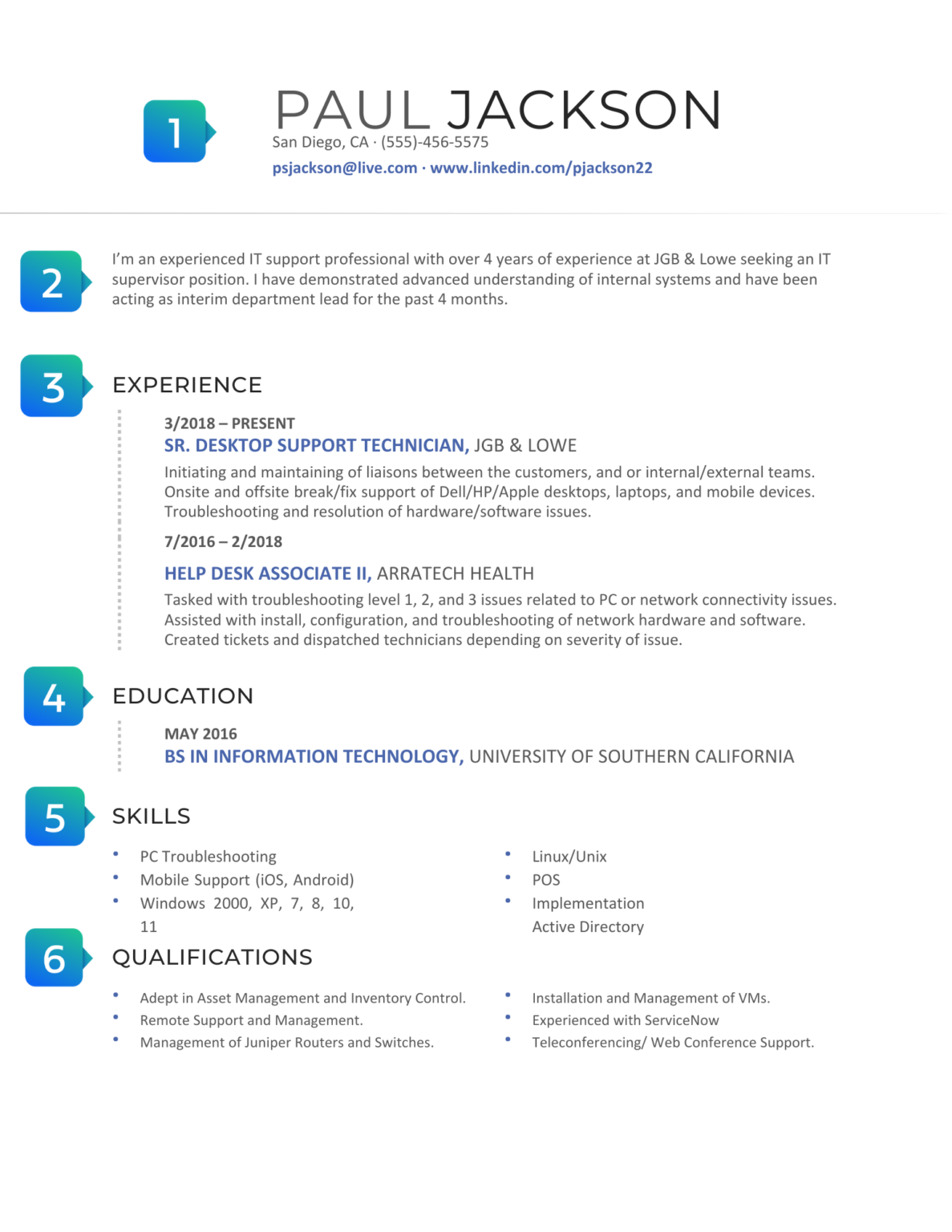
- Education
Degrees, plus any relevant coursework or internal training that supports the move. - Skills
The capabilities the new role calls for, pulled straight from the posting. - Qualifications
Certifications, licenses, and standout strengths that map to the role, often as a quick-scan list of highlights near the top.
How to Get Past the ATS, Even Internally
It’s easy to assume an internal application skips the software, but most companies run every applicant, inside or out, through an applicant tracking system, and AI-assisted screening tools are now common on top of it. Mirror the exact language of the internal job posting, including the skills and titles it names, so your resume is parsed and surfaced correctly. Save and submit the file in the format the system requests, usually a PDF or Word document, and avoid tables or graphics that parsers struggle to read.
Common Challenges, and How to Handle Them
- You don’t have direct leadership experience yet. Point to the moments you led without the title: projects you owned, people you trained, decisions you drove. Evidence of leadership matters more than the formal role.
- You’re competing against outside candidates. Turn your insider status into the argument. You can contribute from day one, and there’s none of the ramp-up or bad-fit risk an outside hire brings. Make that concrete rather than assumed.
Frequently Asked Questions
Final Thoughts
An internal promotion resume is your chance to put the case in writing: the results you’ve delivered and the promotions that prove you’re ready for the next seat. Make that growth easy to see and aim your experience at the role you want, and the hiring manager’s yes gets a lot easier. You’ll usually need a cover letter alongside it, and our guide to writing a cover letter for an internal position pairs directly with this one. When you’re ready to see what else is out there, browse our open jobs, and for interview prep, our STAR method guide walks through how to tell those accomplishment stories out loud.
Get More Hiring Tips Straight to Your Inbox