
On the Same Day, California Protected AI Workers & Washington Stepped Back
Sign Up For Daily Job Market News
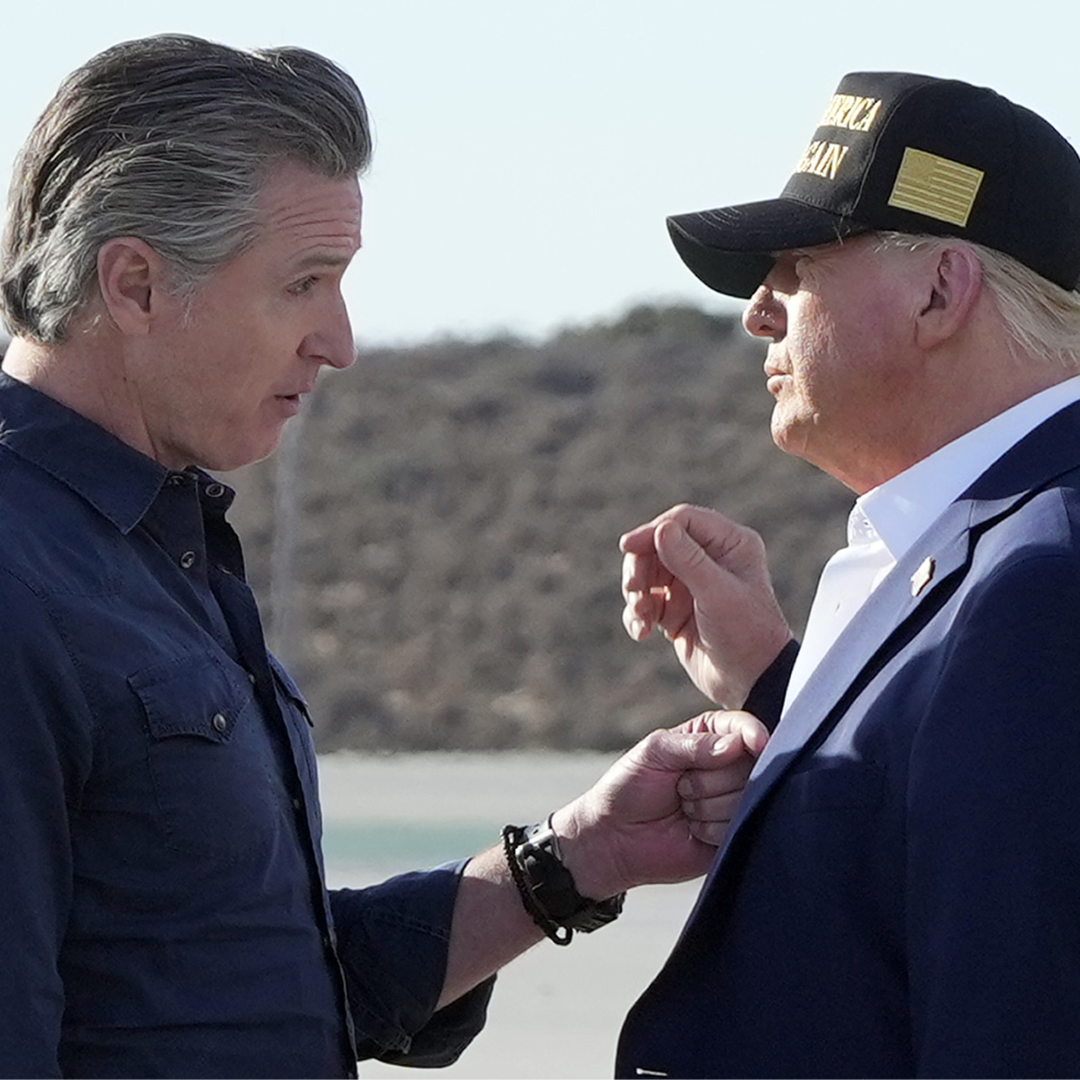
The two orders weren’t mirror images; they addressed different problems. But the same-day contrast is hard to miss. One state is treating AI displacement as a structural workforce problem that existing safety nets weren’t built to handle. The federal government is prioritizing not slowing down the AI industry.
Newsom’s order directs state agencies to work with academics, labor groups, and industry to study a range of policy responses: severance standards and employment insurance for displaced workers, worker ownership models, expanded job training programs, and universal basic capital, a concept where residents would receive stakes in assets like corporate stocks, bonds, or wealth funds. That’s a different approach from universal basic income (direct cash payments), and it’s designed to give workers a stake in the companies benefiting from automation. The order focuses specifically on white-collar workers: customer service representatives, software developers, and marketing and sales professionals. State agencies will also build a public dashboard monitoring workforce disruption and expand AI’s role in monthly jobs reporting.
This is exploratory, not law. It directs “study” and “exploration,” not implementation. Agencies will report back; policy may follow. But the framing is significant. A sitting governor is saying out loud, on the record, that traditional unemployment insurance won’t be adequate for what AI is bringing. As Newsom put it: “Businesses are going to make a fortune, and that’s why you cannot continue to have a payroll tax system that taxes jobs and then subsidizes automation.” The day after Meta and Intuit cut roughly 11,000 workers, that framing lands differently.
Trump’s order had a different focus entirely. It would have created a voluntary framework for vetting national security risks of the most powerful AI systems before public release, with Anthropic, OpenAI, and Google as participants. The impetus came partly from an urgent April meeting convened by Treasury Secretary Scott Bessent and outgoing Federal Reserve Chair Jerome Powell with Wall Street CEOs, warning them about cybersecurity risks posed by Anthropic’s Claude Mythos model. “This new Anthropic model is very powerful,” Bessent said. “Some banks are doing a better job in cybersecurity than others, and we want to have the ability to convene them.”
Trump saw the order differently. “We’re leading China, we’re leading everybody, and I don’t want to do anything that’s going to get in the way of that lead,” he told reporters. Meta CEO Mark Zuckerberg, Elon Musk, and AI adviser David Sacks all spoke with the president before the cancellation. The Commerce Department had separately signed pre-release evaluation agreements with Google, Microsoft, and Elon Musk’s xAI earlier this month, then quietly removed the announcement from its website. “We’re releasing an executive order. No, we won’t. We’re going to sign it this afternoon. Oh, the signing is canceled,” said Serena Booth, a computer science professor at Brown University and former AI policy fellow. “I think this whiplash is because we’re seeing these fractures.”
For workers, the practical read is straightforward. No federal protection is arriving soon. The best hedge against AI displacement right now is personal adaptability: understanding how these tools work in your specific field and being the person who can use them rather than be replaced by them.
Foreign Worker Interest in U.S. Jobs Just Hit a Six-Year Low
New data from Indeed Hiring Lab shows the share of clicks on U.S. job postings coming from abroad hit just 1.4% in April 2026, the lowest level since January 2020, down from a peak of nearly 2.5% in August 2023. The decline began before recent immigration policy changes took hold, meaning the U.S. was already losing its pull with international talent before enforcement tightened.
Tech got hit hardest. Foreign clicks on U.S. software development postings dropped from 14.3% to 12.5% between Q1 2025 and Q1 2026, the largest decline of any sector tracked.
Employer demand is moving in the opposite direction. The share of U.S. job postings offering visa or green card sponsorship has tripled since the pandemic and has stayed elevated. Healthcare leads: physicians and surgeons and therapy roles each see 1.7% of postings offering visa support. The H-2B cap for non-agricultural blue-collar workers was nearly doubled this fiscal year as businesses dealing with labor shortages pushed for relief.
The demographic math behind all of this is the part that deserves serious attention from anyone doing workforce planning. Net international migration peaked at nearly 2.7 million in 2024 and is projected to plunge to 321,000 by mid-2026, a drop of almost 90% in two years. The Congressional Budget Office projects U.S. deaths will begin outpacing births by 2030. Without immigration, the actual population decline could begin within years. A smaller population means a smaller labor force.
The scale of immigrants’ current contribution to the U.S. workforce makes that math concrete. More than 50 million foreign-born people live in the U.S., making up close to 1 in 5 workers. They account for close to 45% of the farming workforce, significant shares of construction, transportation, and service occupations, and ownership of roughly 20% of all U.S. small businesses. Almost half of Fortune 500 companies were founded by immigrants or their children, collectively employing 15.4 million people. We covered what happened to wages in immigrant-reliant industries after a year of enforcement: the shortages many expected didn’t materialize, partly because removing workers also removes consumers. The longer-term labor supply question is different, slower-moving, and harder to reverse.
Staffing your team doesn’t have to be hard.
Reach out and see how we can help.
Weekly Claims Fall to 209,000 as the Four-Week Average Hits Its Lowest of the Year
Initial jobless claims fell 3,000 to 209,000 for the week ending May 16. The prior week was revised up slightly from 211,000 to 212,000. The four-week moving average dropped to 202,500, its lowest point of 2026. Continuing claims ticked up 6,000 to 1,782,000 for the week ending May 9, with the insured unemployment rate holding at 1.2%. Year-over-year: initial claims were 225,000 in the comparable 2025 week, and insured unemployment was 1,889,000. Both are running meaningfully lower now.
The headline is clean. The same low-hire, low-fire dynamic that’s defined the market all year continues: employers are holding workers, and people who lose jobs are moving through the system without piling up on continuing claims. The four-week average parked just above 200,000 is historically tight. For job seekers, that means most of your competition still has a job and isn’t actively looking. The door is narrow, but it isn’t closed.
State-level moves worth noting: Florida added 2,591 initial claims with layoffs flagged in agriculture, construction, wholesale, and retail. Texas added 2,111 (retail trade). Kentucky added 1,739 in wholesale trade and manufacturing. Pennsylvania added 1,108 across accommodation, transportation, and construction. California dropped 1,232 with no comment provided. The highest insured unemployment rates remain concentrated in New Jersey (2.2%), Washington (2.1%), California (2.0%), and Massachusetts (2.0%).
Frequently Asked Questions
It directs state agencies to study and develop policy responses to AI-driven job displacement, including severance standards, employment insurance, worker retraining programs, worker ownership models, and universal basic capital (giving residents stakes in stocks, bonds, or wealth funds). It’s exploratory, not binding law, and focuses specifically on white-collar workers in customer service, software development, and marketing and sales.
Universal basic income provides direct cash payments to individuals. Universal basic capital gives people stakes in income-generating assets (stocks, bonds, or public wealth funds) so they benefit from the productivity gains that automation creates rather than just receiving compensation for displacement. Newsom’s order directs California to study the concept, not implement it.